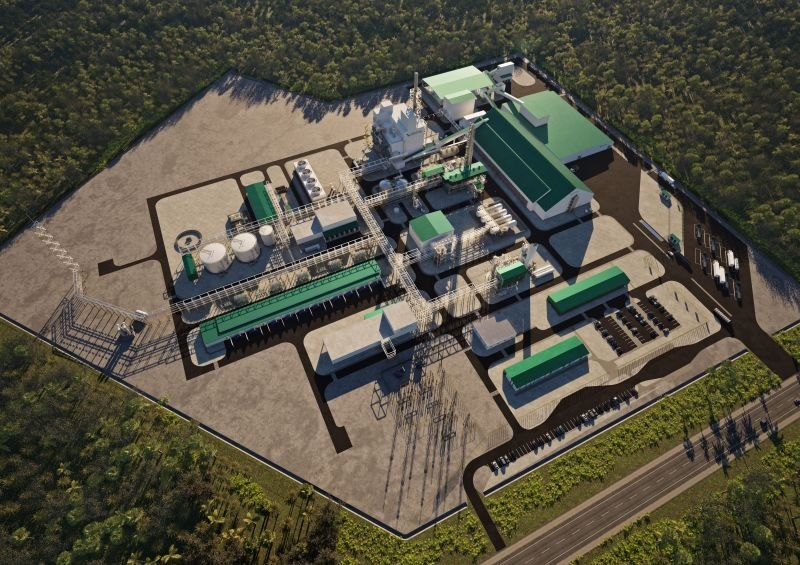


Project Villeta produces green fertiliser based on renewable energy and green hydrogen in Paraguay. The project helps decarbonise fertiliser production while strengthening local industry and reducing dependence on imported fossil-based fertilisers in South America.
Fertiliser production is highly energy-intensive and traditionally relies on fossil fuels. Paraguay is uniquely positioned to support a greener alternative, as most of the country’s electricity comes from hydropower. Project Villeta uses renewable electricity to produce green hydrogen, which is then converted into ammonia and fertiliser with significantly lower emissions than conventional production methods.
The project will produce around 260,000 tonnes of green fertiliser annually and help reduce the region’s reliance on imported fertilisers. At the same time, it is expected to lower CO₂ emissions, support agricultural productivity and contribute to industrial development in Paraguay.
Beyond its climate impact, the project will create jobs and economic activity through construction, logistics and industrial operations. It demonstrates how renewable energy can be used to build new green industries while supporting long-term sustainable growth.
This investment was made possible with funding from the EU union.